A “Polaroid Moment” in Intellectual Property History
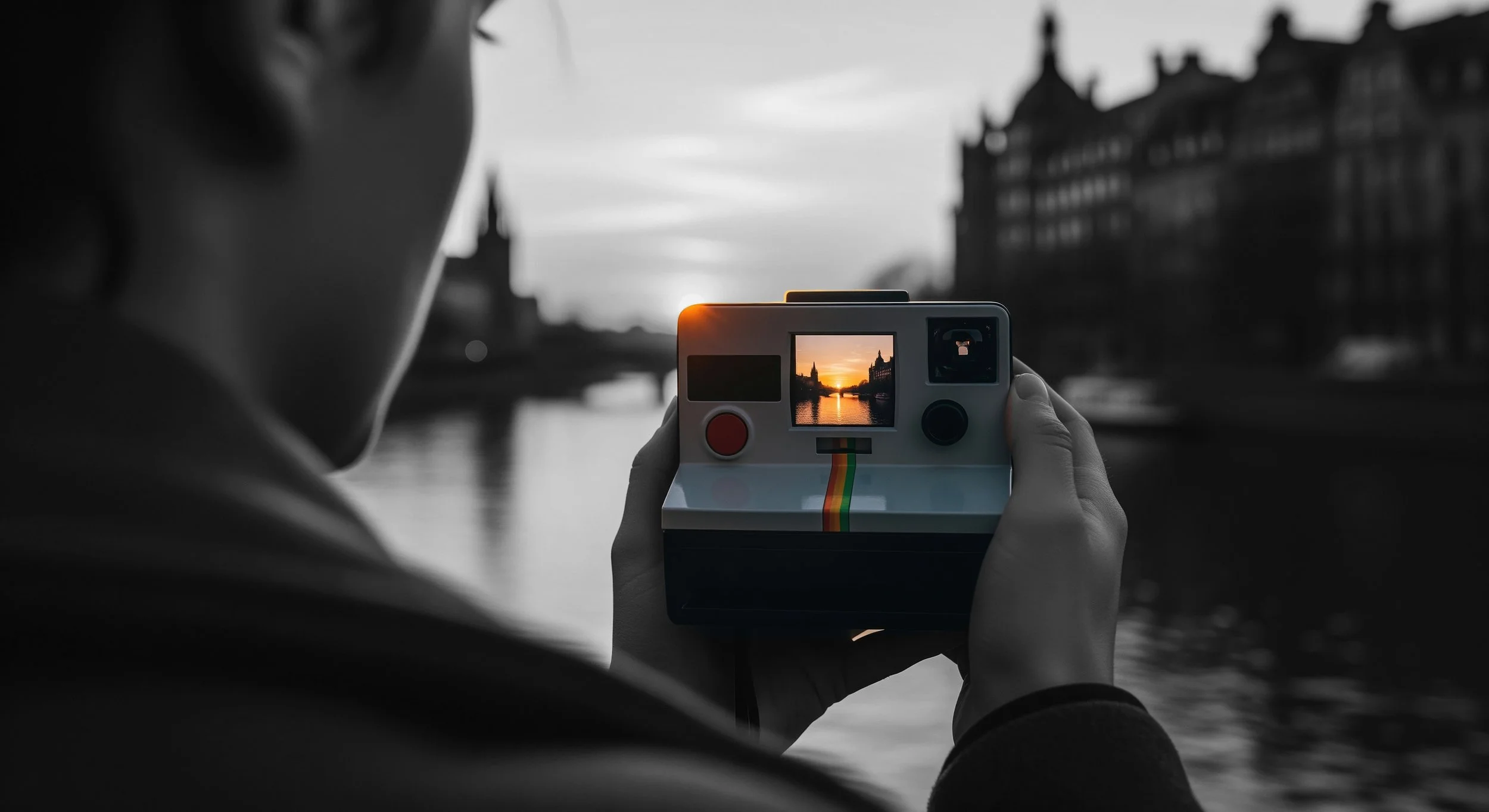
50 years after their invention, Polaroid is still synonymous with those cute, nonchalant little instant photographic prints, spit out half-baked onto our floors or developing in our hands in seconds. Humanity has now taken them for granted, but they remain a genuine marvel to this day. We went from elaborate print facilities the size of a city block, to a miniature print lab within the camera, in the palm of your hands, seemingly overnight.
The miracle of instant photography seemed to come in an instant, then was forgotten, just as suddenly.
Whatever the reason, Polaroids are back. And, at the moment of the 50th anniversary of the Polaroid SX-70, the instant camera that developed the entire market, we wanted to talk about Polaroid’s “Polaroid Moment” – the moment that made all the difference for Polaroid’s success.

Start-up Outlook – 2026
As we’ve said before, there’s no better today than today to start working on a great new start-up idea. Nevertheless, entrepreneurs are naturally curious about what the environment for start-ups will be like this year.
As Zen Buddhism has long preached, the only certainty in life is change. So, with the caveat that “Black swan” events, like the 2008 financial crisis, Covid-19 will always surprise us, here’s the situation so far in 2026:
Venture capital investments are beginning to gather steam again, after a long period of retrenchment, the Federal Reserve has begun cutting interest rates again (.25 basis points in February), and while this has been modest so far, it may signal a new era of “easier money” is upon us.
Series A Rounds (meaning the first rounds of Venture Capital financing) have reached a new high of over $50,000,000.
The emphasis on AI-related innovation has continued in the early days of 2026, with AI startups enjoying about a 50% valuation premium over all other sectors. Other sectors, like some software, are seeing declines. Analysts are referring to this as a “K-shaped” growth curve.

The Perfect Time to Start a Start-Up
As a start-up and intellectual property attorney, I’m often asked, “when is the best time to launch a new business idea.”
My answer is almost always, “now.” You have to be in it to win it in, and there’s no better day to get started than today.
Good work, as quick as possible, is what drives humanity. And the laws of the patent office, just like the law of the jungle, incentivize that fundamental truth. If you don’t take the initiative, someone else will. So the patent office rewards those who strike while the iron’s hot. The United States changed to a “First-to-File” country in 2012, meaning, the first inventor to file a patent application on their concept gets the patent, not the first person to come up with the idea. Later filers get sued for patent infringement, if they go ahead with the product unprotected. So, my answer is always, run, don’t walk to the Patent Office.

Chris Beckman is Recognized as The World’s Leading IP Strategist 6 Years in a Row
Beckman Law is proud to announce that Christopher Beckman, our Managing Partner, has been recognized in IAM 300: The World’s Leading IP Strategists. IAM 300 is one of the highest honors in the field of Intellectual Property, highlighting only the “best of the best” – the most exceptional Intellectual Property professionals, as determined by Intellectual property market sources, including companies, law firms, IP brokers, and other players in the intellectual property field.
In IAM’s words, Chris’ “corporate strategy and business-minded IP advice is like gold dust for emerging companies.”
This is the 6th year in a row that Chris has received the IAM 300 award, and he was also recognized as a Strategy 300 Global Leader in 2026.

Is AI Art Having its Napster Moment?
Just this week, Getty Images sued the makers of Stable Diffusion, an artificial intelligence system (“AI”) that creates art based on existing artwork, like Getty’s. Long before this copyright lawsuit, the line between artistic “influence” and infringement had been a blurry one, but some think the very paper it’s written on is disappearing.
The U.S. began losing its grip on copyright with an earlier groundbreaking technology heralded by Napster, the “file sharing” (and copyright infringing) web application that seemingly everyone had in the early 2000s. And the music industry has never been the same since.
Might AI-art be the next chapter in technology-fueled erosion of artists’ rights, where a promising new technology winds up disrupting, not enhancing, creativity?

Derivative Works & Roy Liechtenstein’s Fifth Kiss (of Death)
The first time I saw a multi-million-dollar “Masterpiece” by Roy Lichtenstein, a supreme painter from the Pop Art movement, I had the same thought as almost everyone: Isn’t this just a comic?
Now, I like comics, and think they’re fun all blown up and framed, mock-seriously, on the office wall. But they’re a dime-a-dozen, not millions a pop (even in Pop Art).
As quickly as that silly thought popped up in my mind, it popped away. Of course not! The entire art world would not be duped into shelling out hundreds of lifetime salaries each for simple enlarged comic strips. It must be some other intellectual statement, based on the underlying concept of comic books. Something deeper, I didn’t understand. Something so subtle, I needed an expert to explain it to me.

AInvention: Can an Artificial Intelligence Be An Inventor?
If you ask the movies, the answer is a resounding “Yes!” SciFi offerings have long posited a startling, often menacing future, in which technology itself surpasses people’s ability to do everything, including inventing technology itself.
Many experts note that intelligence is just a naturally-arising technology, residing in our brains. And any technology can be reverse-engineered. From this logic, human-level artificial intelligence, with the ability to invent, just like us, appears to be guaranteed, and just a matter of time.
Others argue that invention by AI is plainly already taking place, right before our eyes. For example, we task complex AI neural networks with creating complex designs, including AI computer chips themselves.
But is it truly likely, or even possible, for machines to be inventive, in real life?

Virtually Everybody Should “Virtually Mark”
We’ve all seen them. Those old-timey looking patent stamps, branded on clever products.
Why do companies do this? Because a patent number, stamped in bold letters, looks impressive? Does touting patent coverage as a badge of honor (or, at least, unique utility or design), help to sell the product?
Yes, and Yes! Patent marking increases the perceived quality and value proposition of a product tremendously, and Products that are marked as patented sell more than unpatented products.
But these reasons, which we all naturally get, are not even the main reason companies MUST mark their patented goods.

IP Fees Decrease!
In a surprise holiday gift for innovators, the United States has made major cuts to its intellectual property fees, reducing its take from small innovators, called “small entities” and “micro-entities.” This essentially means that individual inventors and most businesses with fewer than 500 employees will now be paying much less for patent applications in the United States!
For example, U.S. filing fees for new Patent Applications are now at a 60% discount for Small Entities and at an 80% discount for Micro Entities, in comparison to the undiscounted rates.
It is an excellent time to file a patent application on that genius idea or design, and protect your rights to your business income from innovation.